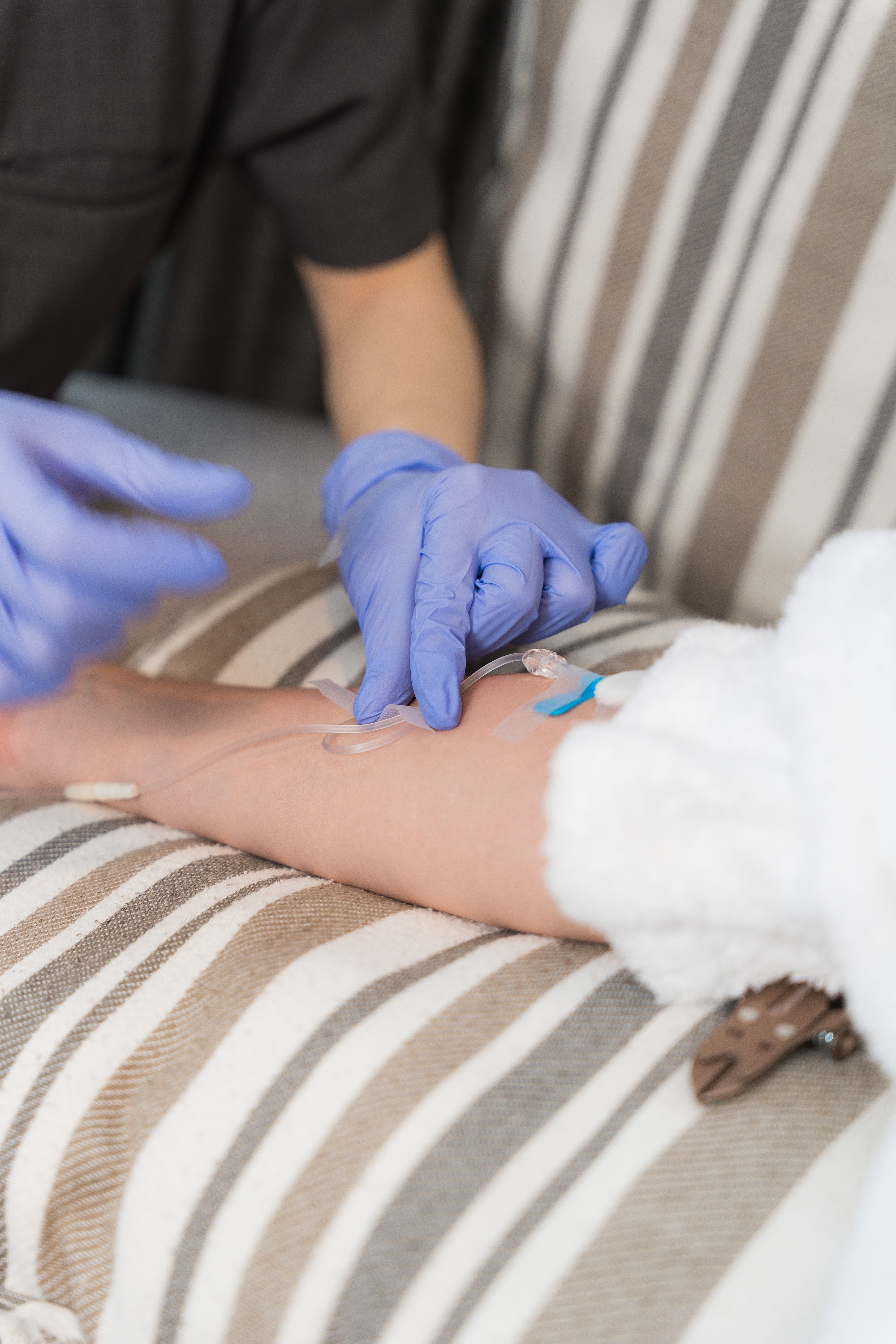
Is IV Therapy Helpful for Dehydration? What to Know When Considering Hydration Support
Dehydration can affect the body more than many people realize. Hot weather, long hours outside, travel, training, business schedules, alcohol intake, poor sleep, and irregular eating can all contribute to feeling run down, lightheaded, fatigued, or simply not like yourself.
For international visitors in Tokyo, busy professionals, and patients with demanding routines, it is not unusual to wonder whether IV therapy may help when hydration feels difficult to restore. At the same time, not every case of dehydration needs IV treatment, and not every case should be treated as a routine wellness issue.
At Pitonne | Stem Cell & IV Therapy, we believe hydration support should be approached thoughtfully. The key question is not simply whether fluids are low, but whether oral intake is enough, whether IV support may be reasonable, or whether formal medical evaluation should come first.
In this article, we explain how dehydration is generally understood, when IV therapy may be considered, and when more urgent medical care may be more appropriate.
What Dehydration Means
Dehydration happens when the body loses more fluid than it takes in, leaving it without enough water to function normally. According to MedlinePlus, common causes include:
- Sweating too much
- Vomiting or diarrhea
- Fever
- Not drinking enough fluids
- Illnesses or medications that increase fluid loss
Dehydration can range from mild to severe. In mild cases, it may feel like ordinary tiredness or a temporary drop in energy. In more serious cases, it can become medically significant and should not be treated casually.
Common Symptoms of Dehydration
MedlinePlus lists common dehydration symptoms in adults such as:
- Strong thirst
- Dry mouth
- Reduced urination
- Dark-colored urine
- Fatigue
- Dizziness
- Dry skin
These symptoms may show up after training, travel, long workdays, alcohol intake, extended heat exposure, or periods of poor sleep and irregular routine.
When IV Therapy May Be Considered
IV therapy may be thought of as one possible form of hydration support.
Patients sometimes ask about IV support when they feel that:
- Drinking fluids does not seem to be enough
- Nausea makes oral hydration difficult
- Fatigue and weakness feel more significant than usual
- Heat or travel has clearly disrupted their condition
- They want structured hydration support after intense activity
- They feel depleted and want to recover in a calm environment
That said, it is important not to think of IV therapy as a universal answer for dehydration. Mild dehydration may improve with oral fluids alone. More serious dehydration may require a hospital-based medical setting rather than standard private IV care.
If You Can Drink Safely, Oral Hydration Is Still the Starting Point
When dehydration is mild, oral hydration may be enough. If someone is able to drink fluids comfortably and keep them down, oral rehydration is often the first and simplest step.
This means that IV therapy should not be approached automatically every time someone feels dehydrated. The context matters. Is oral hydration difficult? Has there been vomiting? Is the schedule making recovery harder? Are symptoms more disruptive than expected? These questions help determine whether IV support may be a reasonable option.
When Medical Evaluation Should Come First
Dehydration can become serious, and in some cases urgent evaluation is more appropriate than arranging a wellness-style IV visit.
MedlinePlus advises urgent medical attention if symptoms include:
- Confusion
- Fainting
- Very little or no urination
- Rapid heartbeat
- Rapid breathing
- Signs of shock
In these situations, the issue may be more serious than ordinary dehydration support. The right next step may be emergency or hospital-based care rather than routine IV therapy.
How Pitonne Thinks About Dehydration Support
At Pitonne, we do not approach dehydration support as simply "fluids for everyone." We look at the patient's overall condition and the context of why hydration support is being considered.
Patients sometimes ask about dehydration-related IV care in situations such as:
- Feeling unwell after heat exposure or long travel in Tokyo
- Fatigue after social drinking or formal dinners
- Recovery support after training
- A sense of being physically depleted during a demanding work period
- Wanting to recover quietly in a hotel, residence, or other private setting
In these situations, IV therapy may be discussed as a form of supportive hydration and condition management.
Pitonne Looks Beyond Fluids Alone
At Pitonne, hydration is rarely viewed in isolation. We often think about it alongside fatigue, travel, training load, sleep, food intake, and general condition.
For that reason, hydration-focused IV care may be part of a broader conversation about:
- Recovery support
- General condition management
- Maintaining comfort during demanding schedules
- Supporting physical balance during travel or high activity periods
This is one reason some patients prefer private IV care in Tokyo rather than trying to manage everything while continuing to feel physically depleted.
What to Review Before Booking
If you are considering IV therapy because dehydration may be part of the problem, it helps to review:
- When your symptoms started
- Whether you are able to drink fluids
- Whether you have vomiting or diarrhea
- Whether your urine amount or color has changed
- Whether you have fever
- Your medical history
- Current medications
- Whether you prefer in-clinic or mobile IV care
These details help guide treatment more safely and appropriately.
Frequently Asked Questions
If I feel dehydrated, should I immediately get an IV?
Not always. Mild dehydration may improve with oral hydration alone. IV support may be worth discussing when fluid intake is difficult, symptoms are more disruptive, or recovery feels unusually hard.
What kinds of patients ask about this most often?
Common situations include heat exposure, long travel days, the day after alcohol intake, training-related fatigue, and periods of unusually demanding work or physical stress.
Can I receive hydration support at my hotel in Tokyo?
If your hotel is within our service area, mobile IV support may be possible. Please contact us in advance to confirm details.
When should I go to a hospital instead?
If there is confusion, fainting, very little urination, rapid breathing, a very fast heartbeat, or any sign of severe dehydration, hospital or emergency medical evaluation should come first.
Summary
IV therapy for dehydration is best understood as one possible form of hydration and condition support, not an automatic answer for every situation. Mild dehydration may improve with oral fluids, while severe dehydration may require hospital-based care rather than routine private IV therapy.
At Pitonne | Stem Cell & IV Therapy, we approach hydration support carefully and in context, with attention to each patient's symptoms, condition, and recovery setting. If you are looking for private, medically guided IV care in Tokyo, please contact us here: Booking & Consultation
References
Related Pitonne Services
Contact Pitonne
Contact Pitonne to discuss clinician-guided wellness options and whether a service is appropriate for your goals.
Contact Us