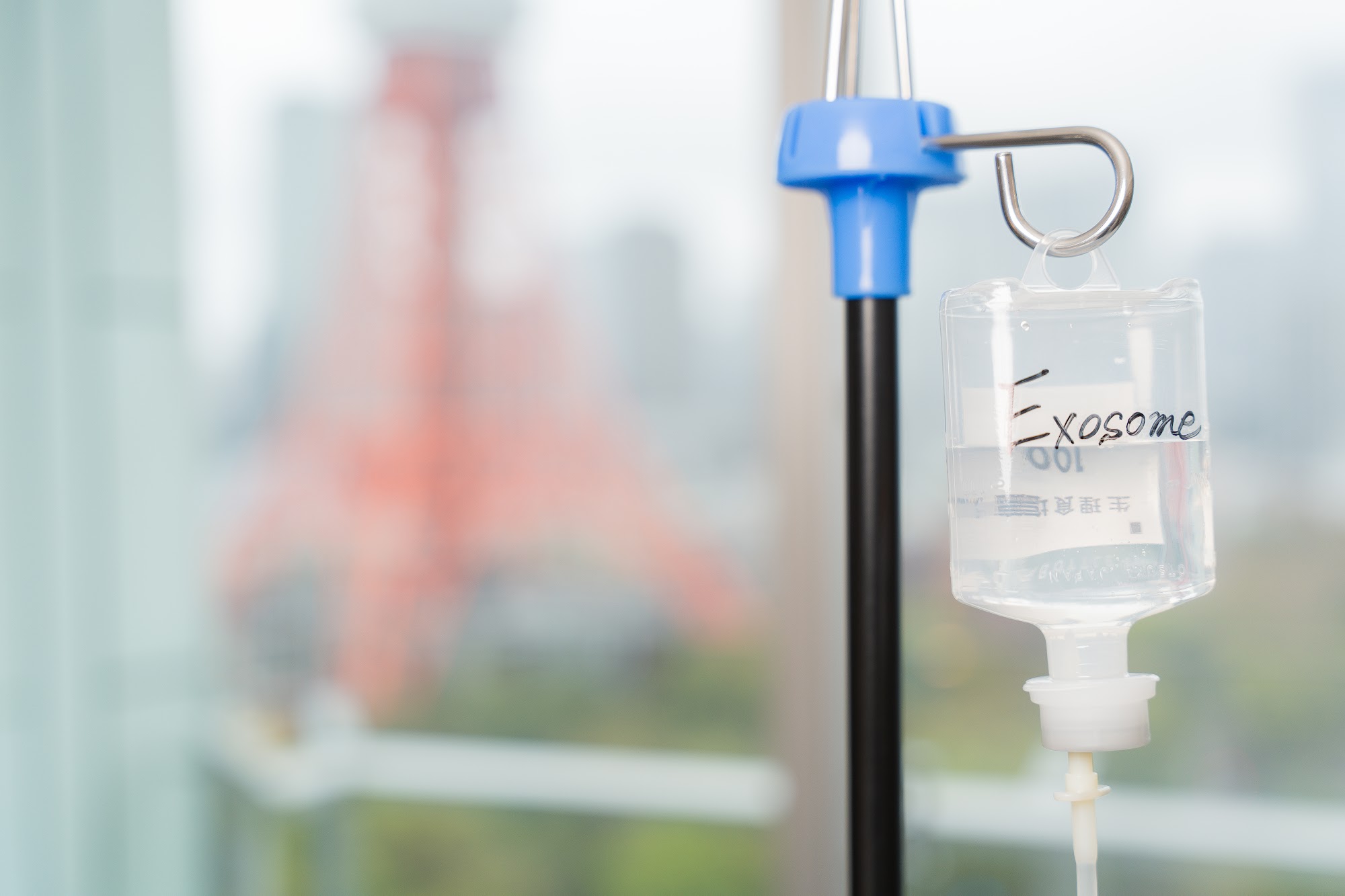
Is Exosome IV Therapy a Good Option for Muscle Recovery? How to Think About IV Therapy After Training
After intense training, it is common to feel muscle tightness, heaviness, fatigue, or a lingering sense that the body has not fully recovered. For athletes, serious trainees, and people who exercise regularly, the quality of recovery often matters just as much as the quality of the workout itself.
At Pitonne | Stem Cell & IV Therapy, we sometimes receive questions such as:
“Is Exosome IV therapy a good option when I want to think more seriously about muscle recovery?”
At Pitonne, we do not present Exosome IV therapy as a dramatic shortcut or a direct “muscle repair treatment.” Instead, we may discuss it as one possible option for broader condition management and recovery support, especially for patients who want to think not only about soreness itself, but about how their entire body feels, restores, and performs over time.
In this article, we explain how Exosome IV therapy, hydration IVs, and vitamin-based IV support may be understood in the context of training recovery, and why the best recovery strategy still begins with fundamentals.
Muscle Recovery Is Not Only About the Muscles
When people think about recovery, they often focus only on the muscles themselves. In reality, recovery is influenced by many factors:
- Sleep quality
- Hydration
- Nutrition
- Stress load
- Travel and schedule disruption
- Overall fatigue
- Balance between training and rest
This is especially true for people who train at a high volume. Repeated physical stress can affect not only local muscle soreness, but the body’s overall sense of depletion, heaviness, and readiness for the next session.
That is why recovery should not be reduced to one single solution. It makes more sense to think in terms of whole-body condition management.
Who May Be a Good Candidate for Exosome IV Therapy in This Context?
At Pitonne, some patients ask about Exosome IV therapy not because they are looking for a quick fix, but because they want support during periods of consistently high physical demand.
This may include people who:
- Train frequently and feel slow to recover
- Want to maintain day-to-day performance and condition
- Travel often and experience disruption in routine
- Struggle with hydration or nutritional consistency
- Feel not only sore, but generally physically depleted
- Want to think about recovery in a broader, whole-body way
For these patients, Exosome IV therapy may be discussed as part of a more comprehensive recovery-minded approach, rather than something used only for one isolated symptom.
Pitonne Recommends Thinking Beyond Hydration Alone
Hydration IVs and vitamin-based IV support can of course be meaningful, especially after heat exposure, intense sweating, long travel, or periods when fluid intake has not been ideal.
At the same time, some patients want to think one step further. They are not asking only about dehydration. They are asking about how to support their body more fully during demanding periods.
This is where Pitonne may also discuss Exosome IV therapy as an option for patients who want to focus more intentionally on overall physical condition and recovery support.
That does not mean we describe it as something that directly and automatically “heals muscle.” Rather, it is presented as part of a broader approach to recovery, wellness, and body balance.
IV Therapy Should Be Thought of as Supporting the Conditions Recovery Depends On
One of the most important ideas here is that IV therapy is not the foundation of recovery by itself. The foundation is still:
- Sleep
- Food
- Hydration
- Protein and nutrient intake
- Rest
- Appropriate training load
At Pitonne, we think of IV care, including Exosome IV therapy, as something that may help support the body alongside those foundations, not instead of them.
That is why we encourage patients not to look for a shortcut, but to think about what helps the body recover well in a realistic and sustainable way.
When Medical Evaluation Should Come First
Not every post-training complaint belongs in the category of routine recovery support. Some situations require proper medical evaluation first.
That may include:
- Severe pain that limits movement
- Clear swelling or bruising
- Numbness
- Significant weakness
- Shortness of breath or dizziness
- Fever with muscle symptoms
- Symptoms that do not improve with normal home care
In these cases, IV therapy should not be the first assumption. A medical evaluation may be needed to rule out injury or other problems.
What Pitonne Values
At Pitonne, we do not look at recovery support as a simple convenience service. We try to understand the patient’s full physical context: how much they train, how they recover, how they travel, how they sleep, and how they are functioning overall.
What matters most to us includes:
- Looking beyond the muscle alone and thinking about whole-body condition
- Considering hydration, fatigue, and recovery rhythm together
- Including Exosome IV therapy as an option when broader condition support is part of the discussion
- Never separating IV care from sleep, food, and recovery basics
- Offering a calm, private setting in Tokyo through in-clinic or mobile care
What to Review Before Booking
If you are considering IV therapy in the context of muscle recovery, it helps to review:
- What kind of training you are doing
- When the fatigue or heaviness started
- Whether you are hydrating and eating well
- Whether sleep has been adequate
- Whether the problem is mainly soreness, heaviness, or more serious pain
- Whether swelling or bruising is present
- Your medical history
- Current medications
- Whether you prefer in-clinic or mobile care
Frequently Asked Questions
For muscle recovery, is a hydration IV or Exosome IV therapy better?
It depends on the patient’s condition and goals. Some people mainly need hydration support, while others want to think more broadly about condition management and recovery quality. At Pitonne, this is discussed based on the individual situation.
Is Exosome IV therapy suitable for people who train regularly?
Yes, some patients who train regularly ask about it in the context of overall recovery support and whole-body condition management.
Will IV therapy make my muscles recover faster?
It is more realistic to think of IV therapy as supporting hydration, nutrition, and general condition rather than directly replacing sleep, food, rest, or the natural recovery process.
Can competitive athletes receive this kind of IV therapy?
Competitive athletes must always confirm anti-doping rules in advance. The issue may involve not only the substance used, but also the method and volume of administration.
Summary
When thinking about muscle recovery, Pitonne may recommend not only hydration IVs and vitamin-based IV support, but also Exosome IV therapy as an option for patients who want to think more broadly about whole-body condition and recovery support.
That said, IV therapy is not the foundation of recovery on its own. Recovery still depends first on sleep, food, hydration, rest, and training balance. For patients with high training loads, ongoing fatigue, or a strong interest in maintaining daily performance, the more important question is not only how to recover a muscle, but how to support the body as a whole.
If you would like to discuss Exosome IV therapy or IV support in a calm, private setting in Tokyo, please contact us here: Booking & Consultation
Related Pitonne Services
Contact Pitonne
Contact Pitonne to discuss clinician-guided wellness options and whether a service is appropriate for your goals.
Contact Us